
Who this is actually for
Some homeowners want a metal roof and want it to look like a metal roof. Standing seam is for them. Others want the fifty-year assembly without the vertical-ribbed appearance — because the house is a traditional style, because an association has something to say about it, or simply because they prefer the look of shake.
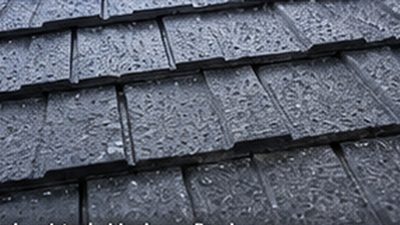
Steel shingle is the answer to that. A stamped, interlocking steel panel installed in courses, formed to mimic slate, wood shake, or architectural shingle, with the corrosion resistance and service life of metal underneath the appearance.
How the system works
Each panel interlocks with its neighbors on all four sides. That interlock does two jobs: it keeps water out, and it holds the field of the roof together as a single mechanically connected sheet. That is why these systems typically carry high wind ratings — the roof does not rely on the adhesive seal strip that an asphalt shingle depends on, and which is the first thing to fail as asphalt ages.
Fasteners land in the concealed nailing flange and are covered by the next course, so as with standing seam, nothing penetrates the weather surface. Panels are light — typically well under half the weight of the asphalt they replace — which matters if you are recovering over an existing roof or working on an older structure.
Steel shingle handles Minnesota hail better than asphalt, but "better" is not "immune." Severe hail can dimple any light-gauge metal. The difference is that a dimpled steel panel is usually a cosmetic problem while a bruised asphalt shingle is a functional one — the mat is damaged and the clock on the roof has started. Stone-coated surfaces hide minor dimpling better than smooth painted ones.
Where it beats asphalt in this climate
- Freeze-thaw. Asphalt gets brittle as it ages and cold cycling accelerates it. Steel does not embrittle.
- Granule loss. An asphalt shingle sheds its UV protection into your gutters for twenty years. A coated steel panel does not have that failure mode.
- Wind. Mechanical interlock rather than an adhesive strip that weakens with age.
- Weight. Lighter than asphalt, which widens the recover option.
- Replacement cycle. 40–50 years against 15–20. In a house you intend to keep, that is one roof instead of three.
Where standing seam is the better call
We would rather tell you this than sell you the wrong system. Choose standing seam instead if your roof is low slope, if it collects and holds drifting snow, if you want the maximum achievable service life, or if shedding snow quickly matters more to you than appearance. The continuous smooth panel of a standing seam roof sheds a snow load more readily than a coursed, textured surface does.
Installation in practice
The build-up is the same discipline as any metal roof here. Tear off to the deck in most cases, replace unsound sheathing at the contracted per-sheet rate, then ice barrier from the eave to at least 24 inches inside the exterior wall line per MN Residential Code R905.1.2 — 36 inches along the slope on pitches of 8:12 and above.
From there, synthetic underlayment, then battens or direct-to-deck depending on the system, then panels set in courses from the eave up. Hips, ridges, valleys and sidewalls get matching formed trim. Penetrations get flashed, not caulked.
What it costs
Steel shingle and stone-coated systems run roughly $9 to $14 per square foot installed in this market — between architectural asphalt at $4–$7 and steel standing seam at $12–$16.
Complexity drives the number more than area does. A coursed system has more cut pieces than a standing seam roof on the same house, so valleys, dormers and hips carry proportionally more labor here than they do with vertical panels. The pricing page has the full breakdown, and we install across Monticello, Albertville, St. Michael and four more communities.